
The Main Street of America: Route 66 Turns 100
Vintage cars, neon lights, and endless skies bring to life the wonder and myth of Route 66, the two-lane highway that stretches 2,448 miles from Chicago, Illinois, to Santa Monica, California. Started in 1926 and paved completely by 1938, Route 66 connected the eastern United States to the Pacific Coast with one road, opening up a major westward migration route for Americans and giving birth to the region’s legendary road trip culture. Now celebrating its 100th year, Route 66 is best known for its oversized statues, picturesque landscapes, and mid-century nostalgia that calls Americans to experience it all at least once. Roughly two to three million travelers explore at least some part of Route 66 every year.
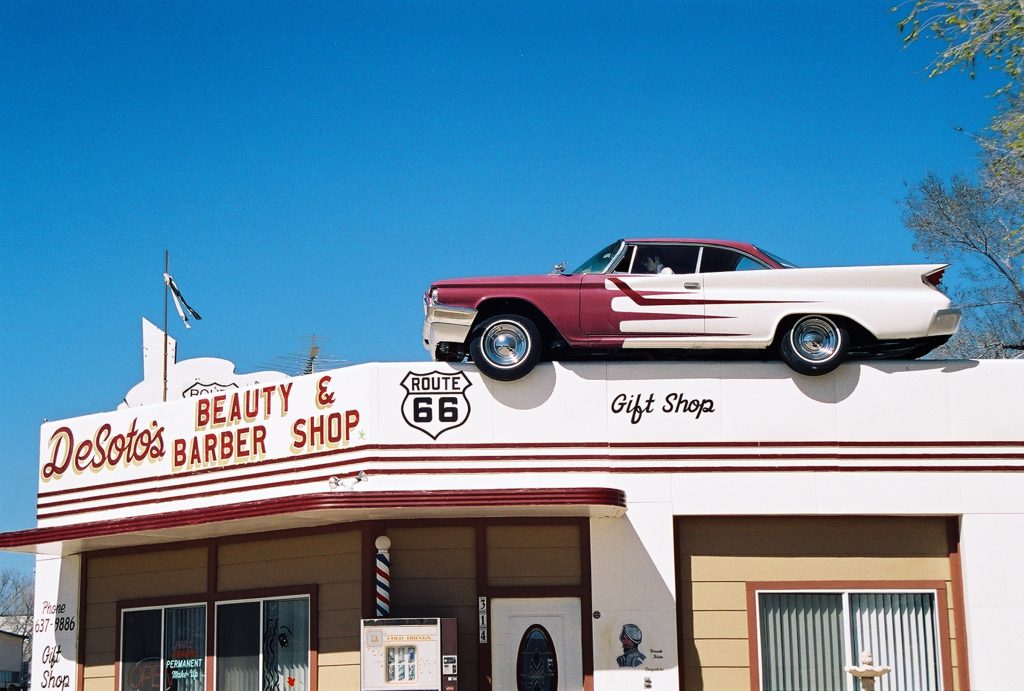
In the early 1920s, the American road system was a chaotic patchwork of local routes and uncoordinated county and state paths that often changed names or stopped at state lines. With more and more Americans purchasing automobiles every year, the federal government created a unified numbered highway network that would meet the demand for flat, year-round roads. The Federal Aid Road Act of 1916, signed by President Woodrow Wilson, was the first federal-aid highway funding program, leading to President Warren G. Harding’s Federal Highway Act of 1921. In 1926, Route 66 was officially designated as part of this new system.
In the 1930s, Route 66 provided a potential lifeline for Dust Bowl migrants devastated by drought and farm foreclosures, who headed to California for the chance at better living conditions and employment. The highway was a direct route to the Pacific Coast for roughly 2.5 million people, making it one of the largest migrations in American history.
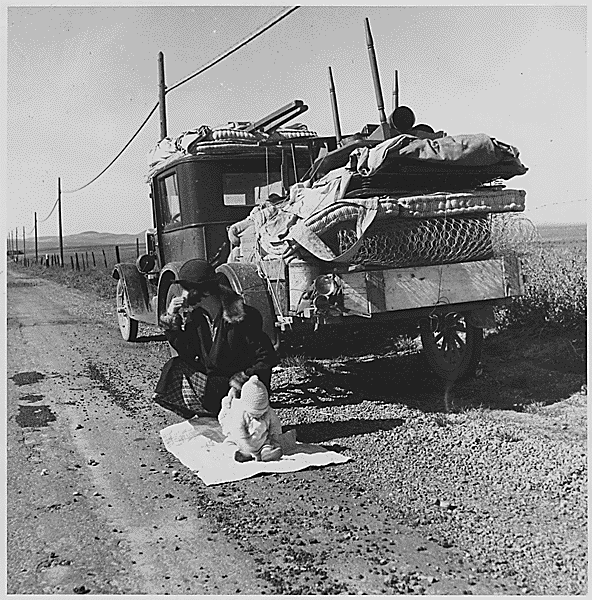
Dust Bowl migrants head to California on Route 66 in 1935. NAID: 195532
In the 1950s, brand new four-lane highways began to replace parts of Route 66. Within a couple decades, local economies all along the route were failing. But residents noticed something special about the visitors who were still trickling in during the 70s and 80s: they had fond memories of driving along Route 66 with their parents. The nostalgic stories inspired some people, like Angel and Juan Delgadillo, who grew up in Seligman, Arizona during the 1930s and 1940s, when thousands of cars were coming through their town every day. Angel, who took over his father’s barber shop business, spearheaded a campaign for Historic Route 66 signage and is the main founder of the Historic Route 66 Association of Arizona. His efforts sparked a global revival in tourism to Route 66 and inspired other historic associations to form in every other Route 66 state.
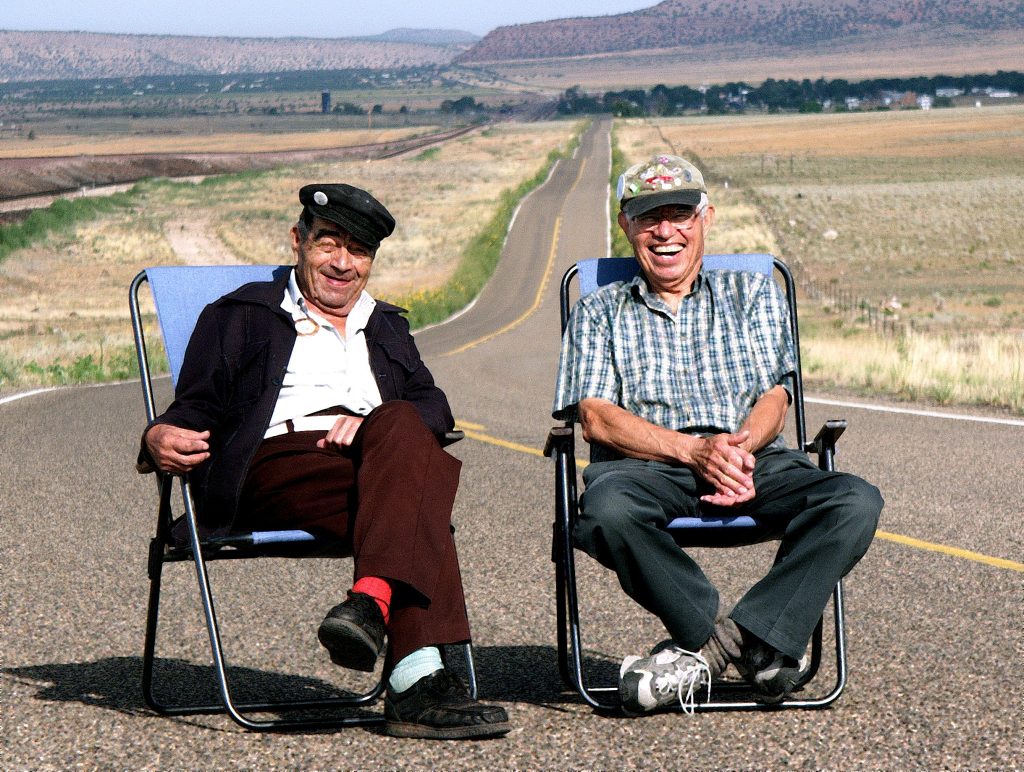
Brothers Juan and Angel Delgadillo sit in lawn chairs on Route 66. NAID: 7719420
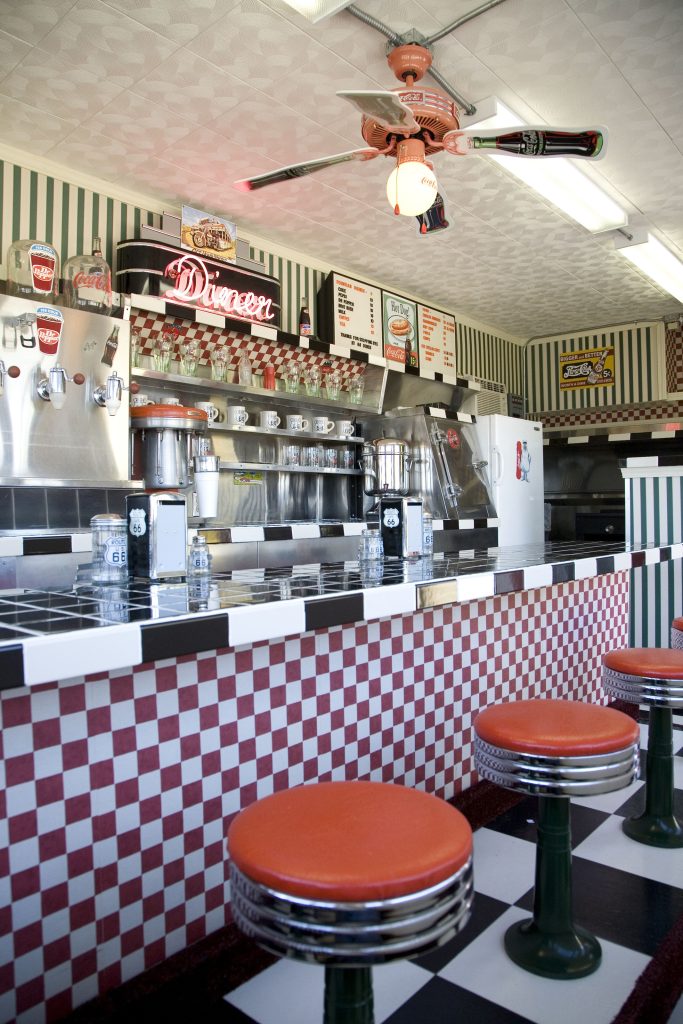
Businesses along Route 66 like Angel’s barber shop and Juan’s restaurant capitalized on nostalgia marketing and kitsch souvenirs, turning their shops, stores, and hotels into living museums of 1950s Americana. Communities continued to restore vintage signs, diners, motels, and oversized roadside attractions to give visitors a destination rather than just a transit lane, while state legislation and the National Park Service secured Route 66’s designation as a National Historic Trail. Hundreds of locations, including motels, gas stations, diners, and neon signs are now listed on the National Register of Historic Places. Thanks to a new generation of historians and business owners like Angel and Juan, Route 66 continues to captivate the American people with the wonder of the open road and an America of yesterday.
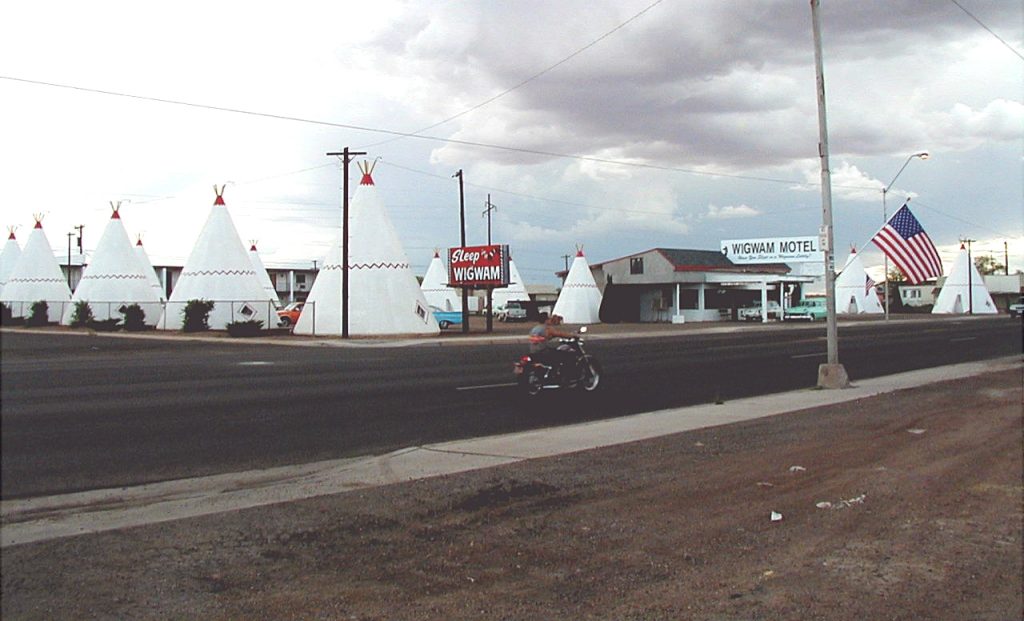
Wigwam Motel in Holbrook, Arizona NAID: 7719437
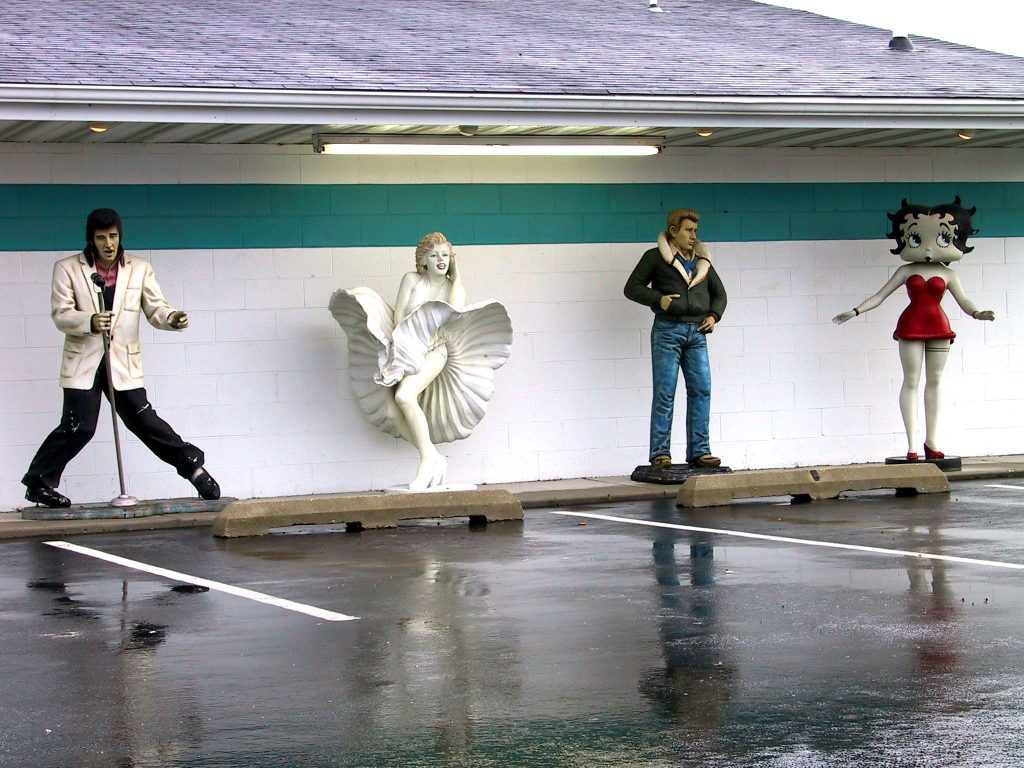
Statues at Route 66 Polk-A-Dot Drive In in Braidwood, Illinois NAID: 7719459
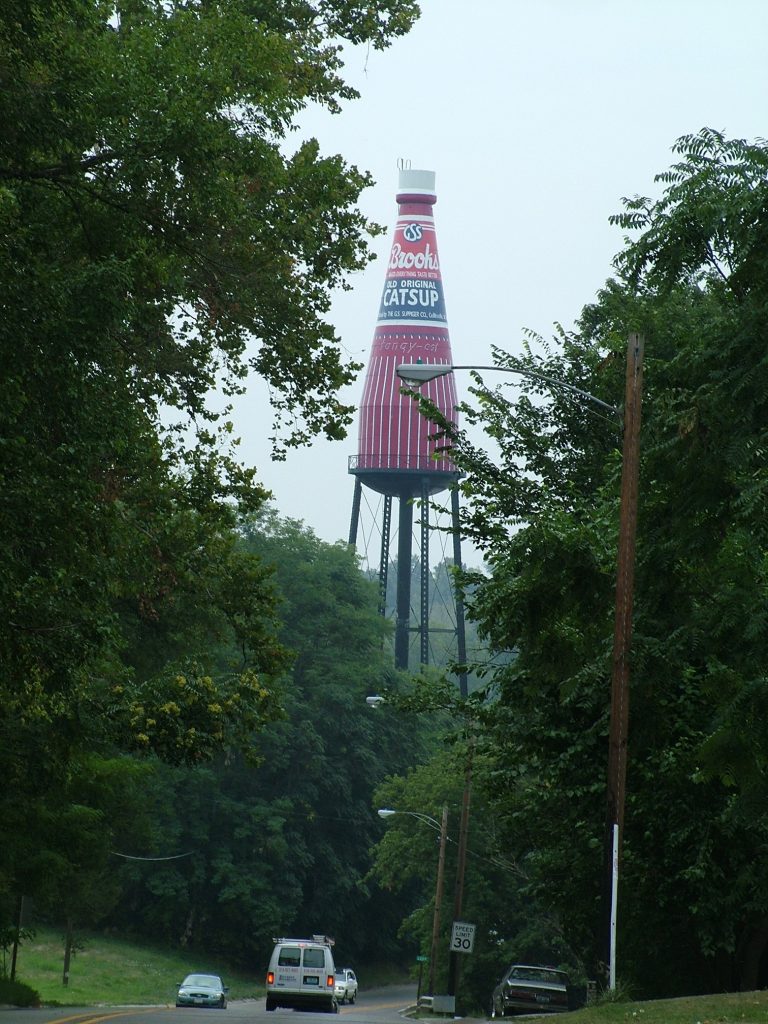
The giant ketchup bottle water tower in Collinsville, Illinois. NAID: 7719431
The giant statues and souvenirs aren’t the only things drawing people to Route 66. Scattered along the road are dozens of historic sites and landmarks, like the Grand Canyon, Petrified Forest National Park, and the remains of the Native American city of Cahokia. Once a bustling metropolis of 20,000 people in pre-Columbian America, the Cahokia mounds are now a UNESCO World Heritage Site, located near St. Louis, just a few miles off the historic path of Route 66, and receives more than 350,000 visitors every year.
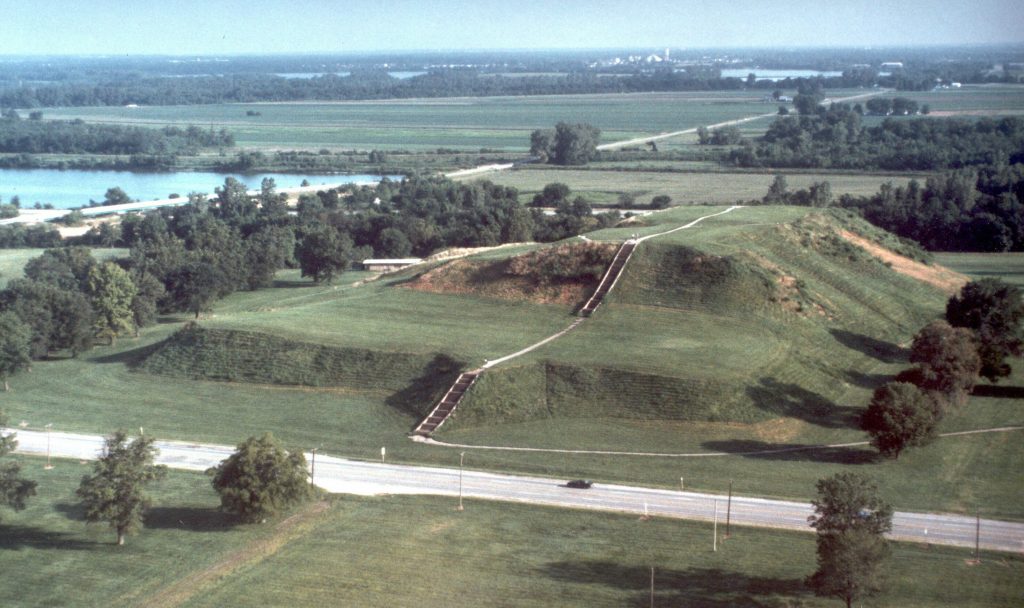
An aerial view of Cahokia Mounds State Historic Site NAID: 7719452
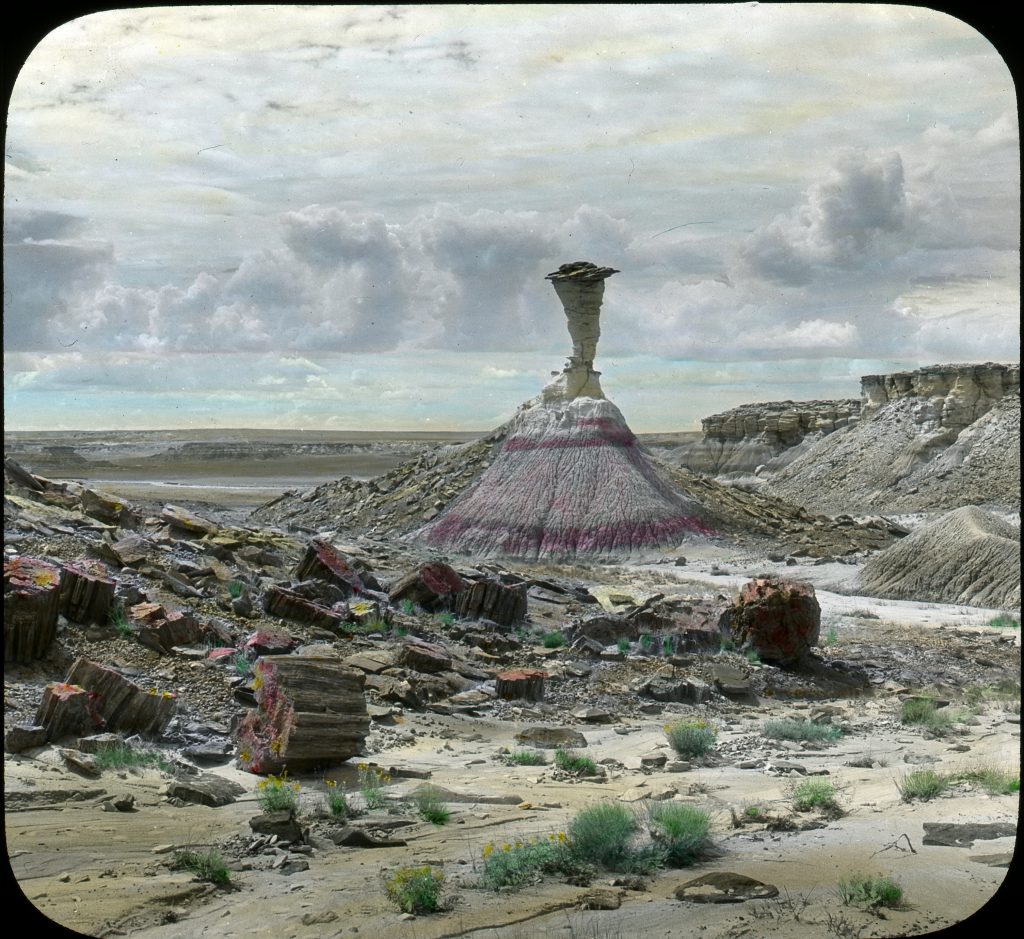
Route 66 runs directly through Petrified Forest National Park. NAID: 155822695
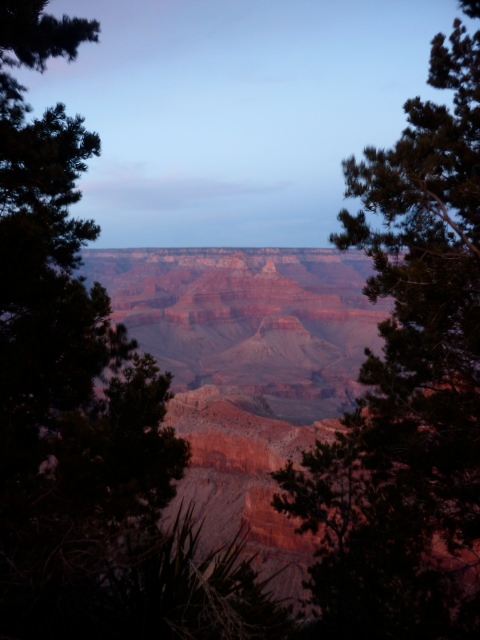
The Grand Canyon is a popular side trip near Route 66. NAID: 7719458
Route 66 is more than a road; it is a 100-year-old, 2,448 mile-long story of American resilience that continues today. More than bright lights, cozy diners, and giant ketchup statues, Route 66 is the people who live along it and share their local heritage, stories, and memories with the travellers on the road today.