Westward Bound
From our earliest days as a nation, Americans possessed an innate desire for expansion and growth—a need to explore the unknown and bring the American dream along with them. And although it’s hard to imagine now, America didn’t always stretch from “sea to shining sea.” Until the fall of 1803, the nation’s western borders ended at the Mississippi River. All that changed on this very day in 1803, when Congress ratified the Louisiana Purchase and the United States doubled in size.
The purchase expanded American territory by 828,000 square miles, reaching beyond the Mississippi River and stretching to the West’s rugged plains, forests, and mountains.
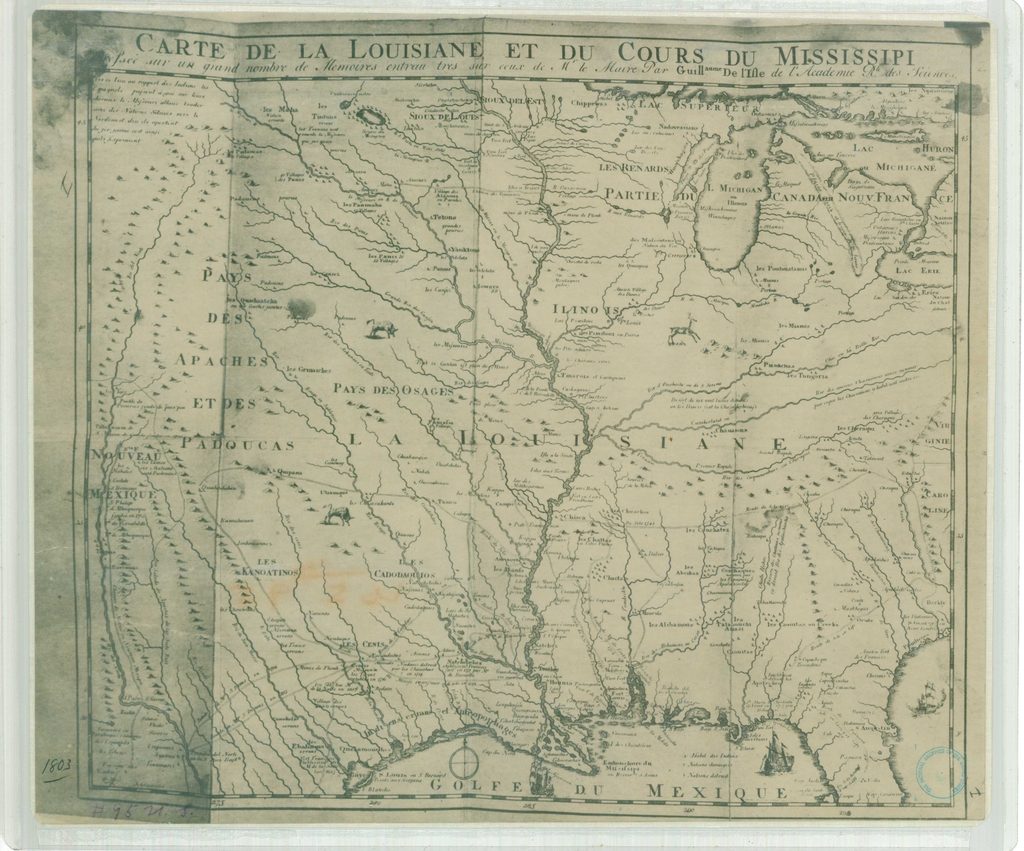
Map of the Louisiana and the Mississippi River NAID: 77452263
Like all U.S. treaties with foreign powers, the records of this historic transaction are preserved at the National Archives. This week’s Archives Experience will explore the incredible story of the Louisiana Purchase.
There Is on the Globe, One Single Spot
Recognizing that control of the Mississippi River was vital to the economic survival of the young republic, President Thomas Jefferson instructed fellow founding father Robert R. Livingston, the U.S. minister to France, to negotiate the purchase of New Orleans. In a private letter to Livingston, Jefferson proclaimed, “There is on the globe one single spot, the possessor of which is our natural and habitual enemy. It is New Orleans…"
Spain had recently ceded control of the area to France and its leader, Napoleon Bonaparte. Negotiations moved slowly, so Jefferson sent James Monroe as an envoy extraordinary to Paris to help negotiate the deal. Monroe had been a favorite among the French people during his previous tenure as minister, and Jefferson hoped he could spur progress.
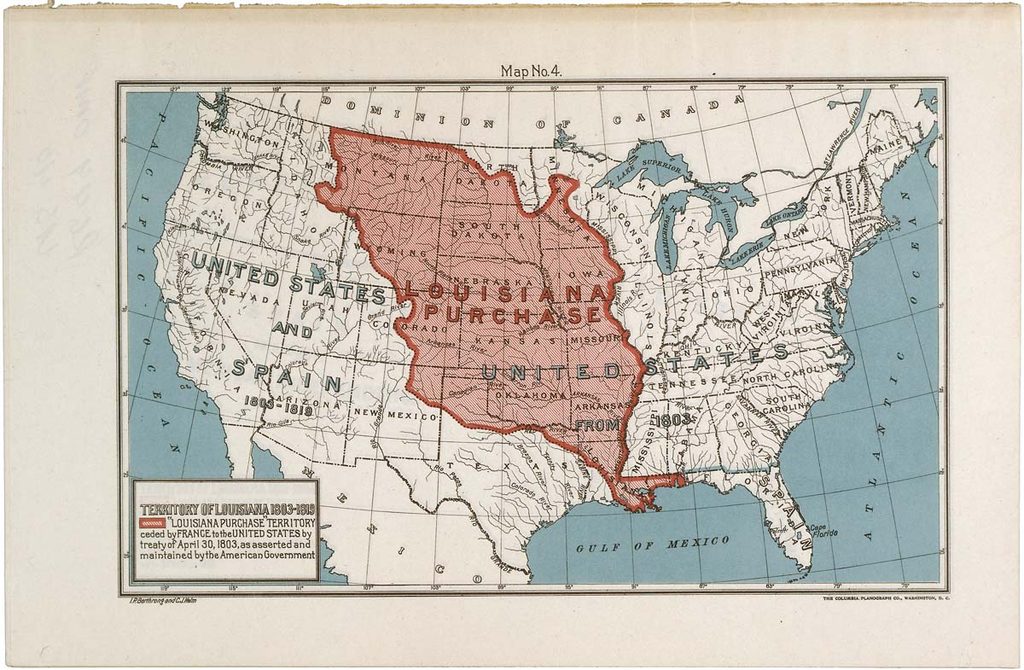
Map of the Louisiana Purchase Territory NAID: 594889
Let the Land Rejoice
By the time Monroe arrived in Paris in April 1803, France was facing an imminent renewal of war with Great Britain. Surprisingly, instead of selling a single port, French Treasury Minister François Barbé-Marbois offered Livingston and Monroe the entire Louisiana Territory. Without a way to quickly get permission from Jefferson, Livingston and Monroe made a daring diplomatic gamble and negotiated a price of $15 million.
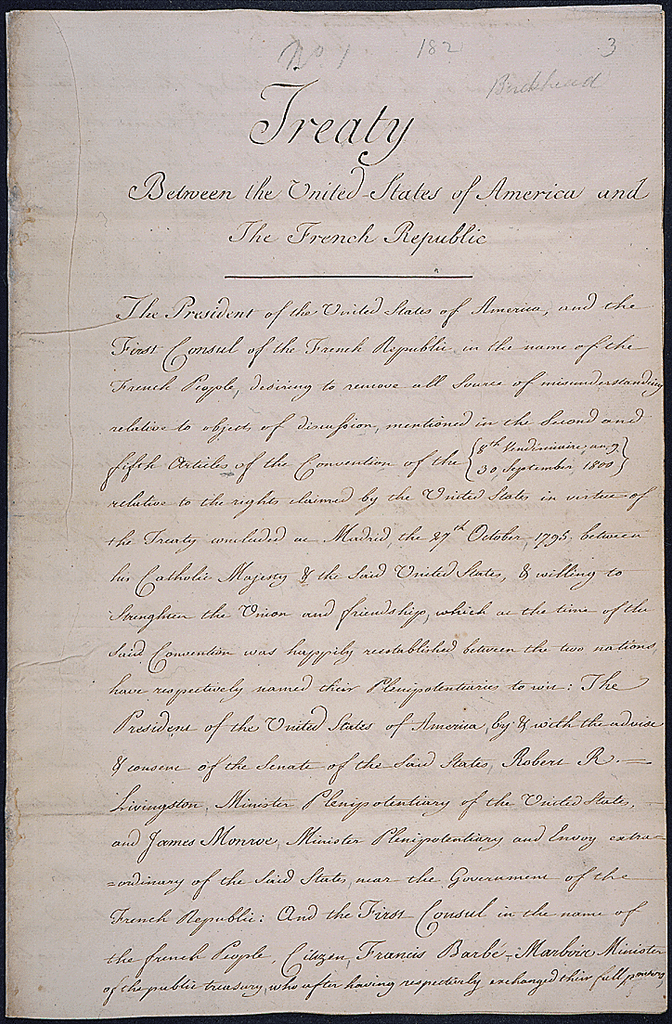
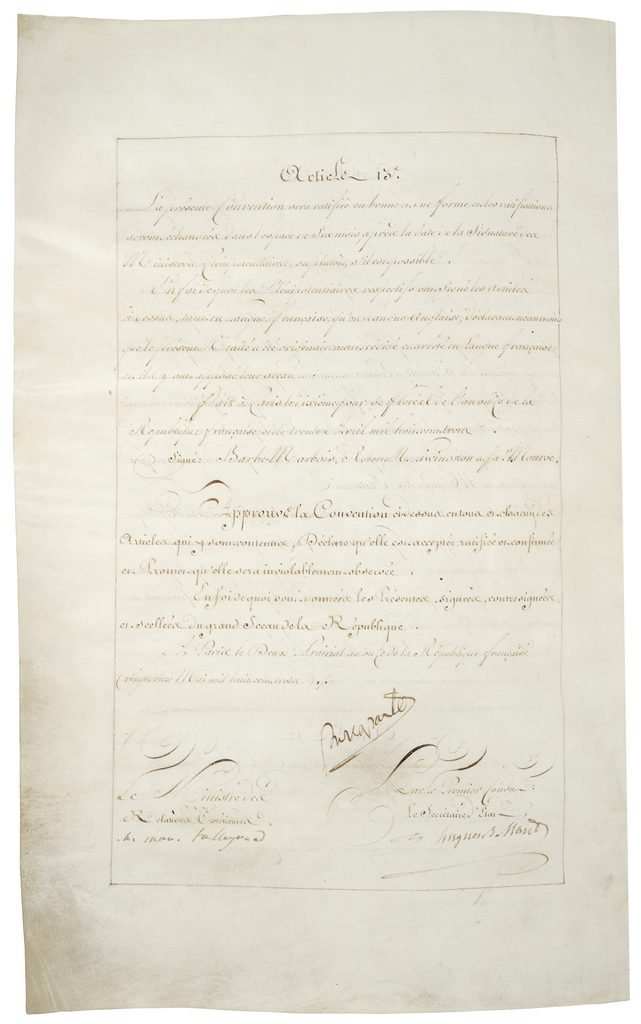
The Louisiana Purchase Treaty was accompanied by two financial conventions outlining the compensation for France. Under these agreements, the United States allocated $11.25 million to acquire the land outright, while the remaining $3.75 million was designated to assume the claims of American citizens against France. The bulk of this total payment was financed through the issuance of U.S. government stock.
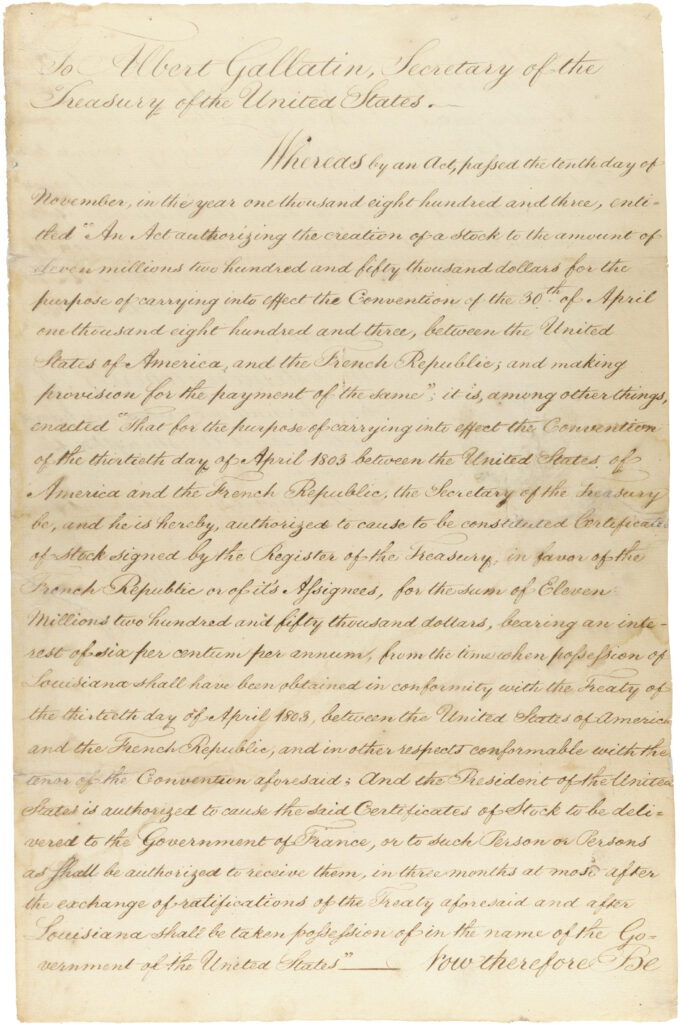
Warrant from President Thomas Jefferson Regarding the Payment to the French Republic for Louisiana Purchase NAID: 7891110
General Horatio Gates told President Jefferson on July 18, 1803, “Let the land rejoice, for you have bought Louisiana for a song.” And while the deal came as good news, Jefferson worried that the Constitution did not specifically grant the federal government the authority to acquire territory. With little time to ratify the treaty, Jefferson abandoned a plan to pass an amendment to the Constitution, and the Senate passed the treaty with a vote of twenty-four to seven. From that point on the march westward accelerated, reshaping our borders and our destiny.
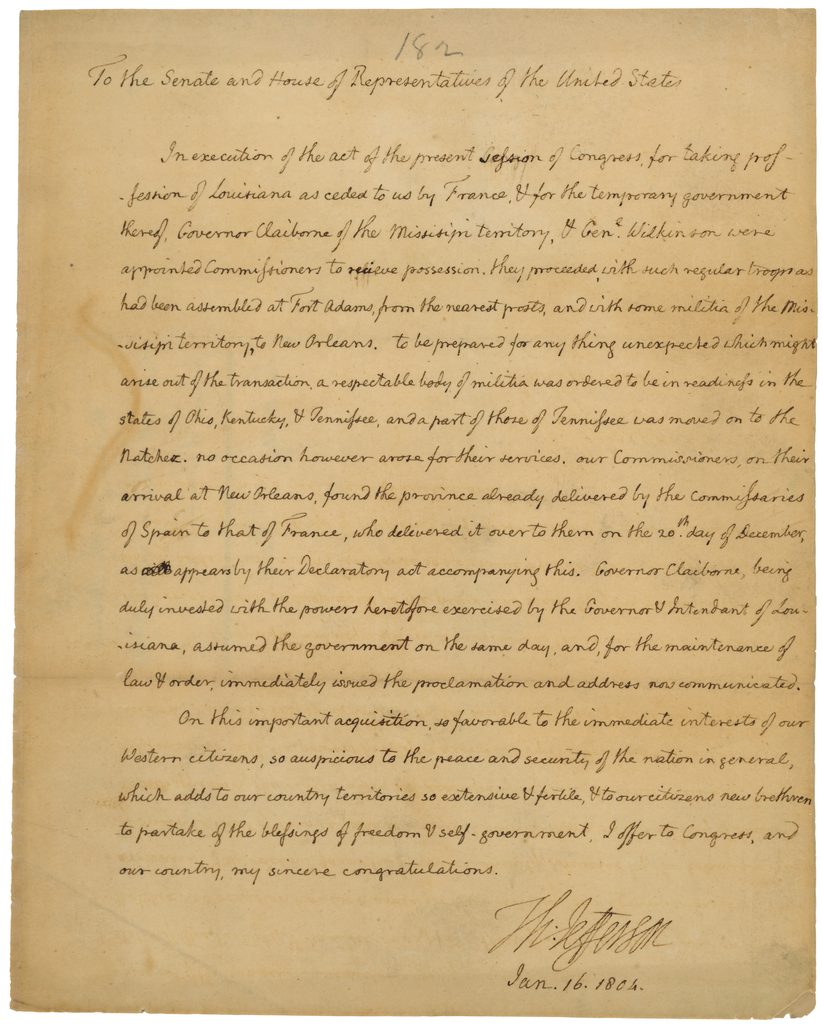
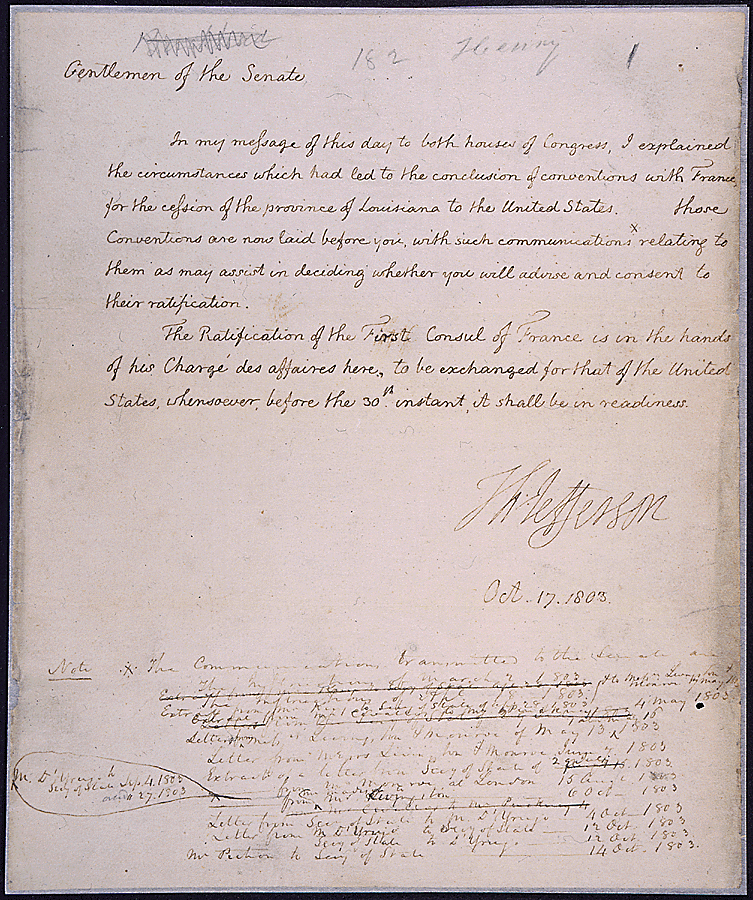
Message of President Thomas Jefferson laying before the Senate the conventions with France NAID: 306460
Watch to learn more about this document.
The purchase was officially completed on December 20, 1803. William C. C. Claiborne, governor of the Mississippi Territory, participated in the ceremonial transfer of Louisiana to the United States. He issued a proclamation to the residents in English, French, and Spanish to accommodate the diverse population previously ruled by multiple governments. The address announced their new allegiance to the United States and assured them that their rights would be protected under the U.S. Constitution.

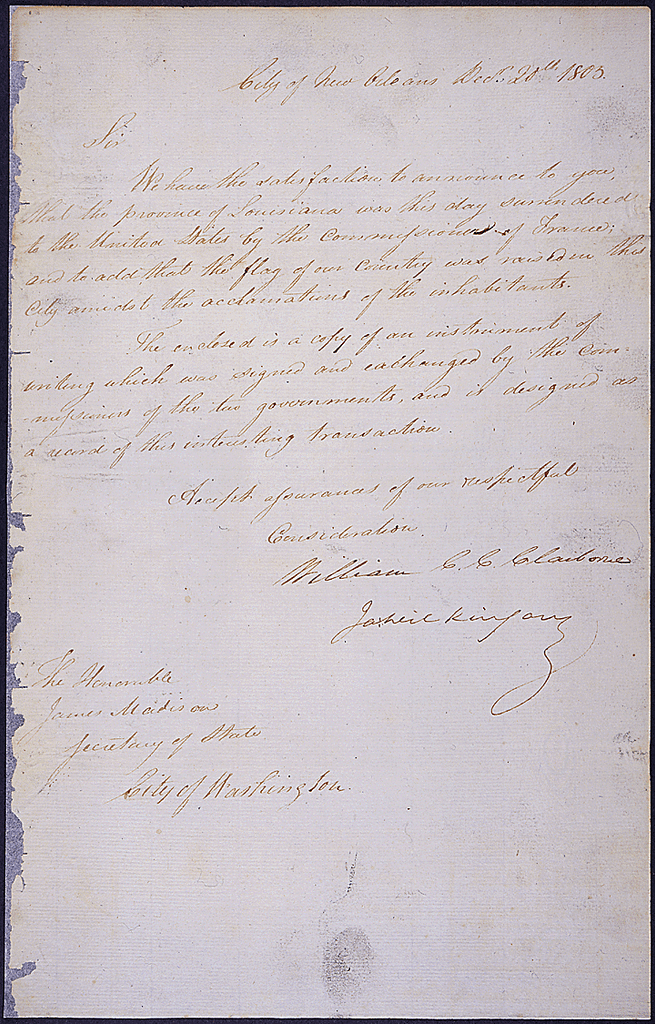
Letter to James Madison, Secretary of State, Announcing the Surrender of Louisiana to the United States by France NAID: 306704
Impact of the Treaty
Before millions could move West, the United States government needed to understand exactly what lay ahead. In 1804, President Jefferson commissioned the Corps of Discovery, led by Meriwether Lewis and William Clark, to map a water route to the Pacific Ocean, study the region's natural environment, and establish trade relationships with Native American tribes. Their journals, maps, and detailed records laid the physical groundwork for the millions of settlers who followed.
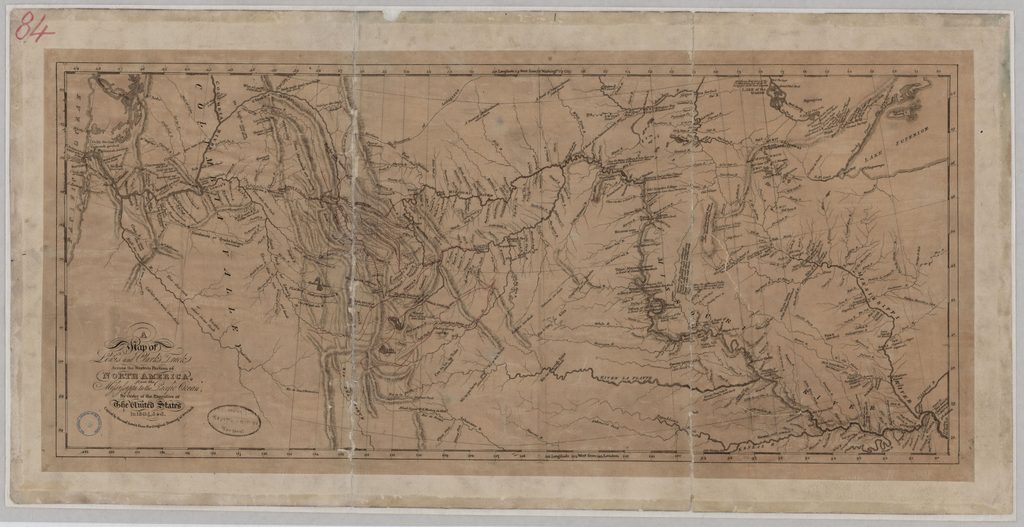
A Map of Lewis and Clark's Track Across the Western Portion of North America NAID: 102279771
While the purchase opened up new land for settlement to those in the United States, it also impacted thousands of Indigenous peoples already living there. As the westward drive intensified, it sparked a wave of agreements known as the Ratified Indian Treaties.
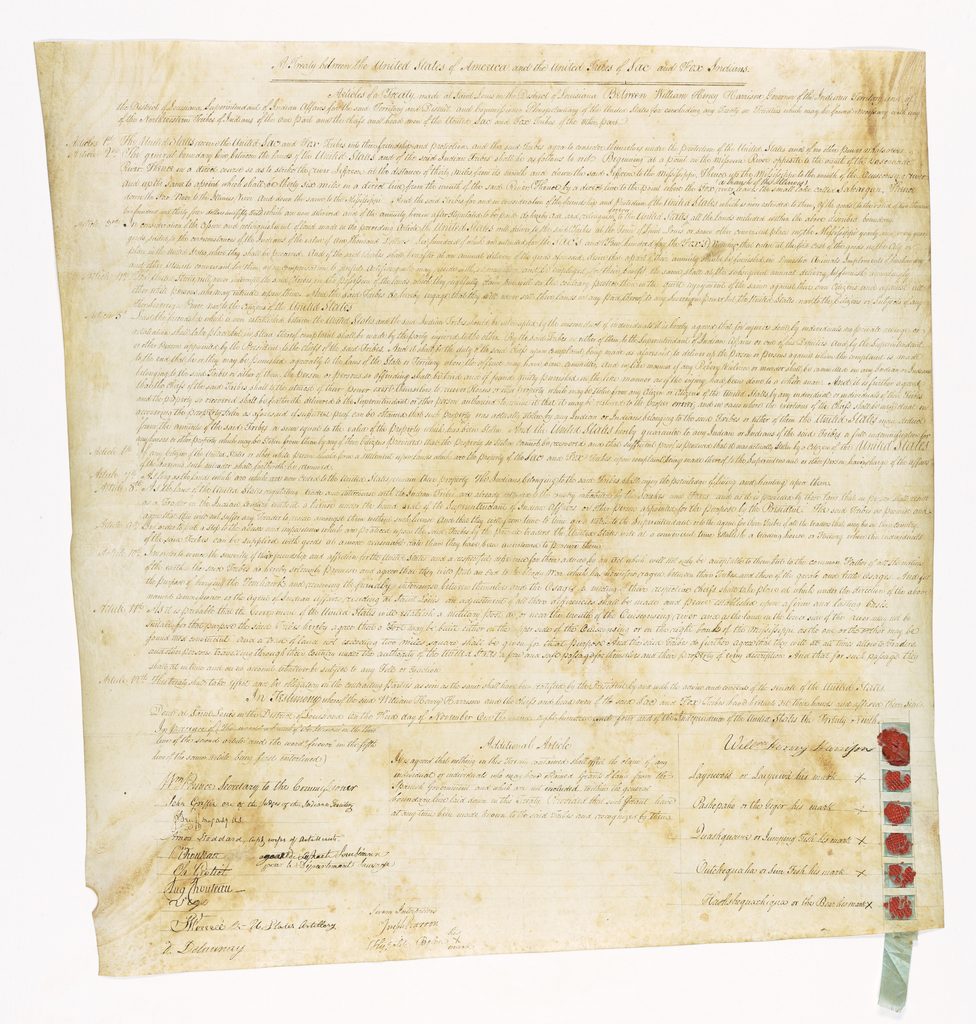
Treaty Between the United States and the Sauk and Fox Indians Signed at St. Louis in the District of Louisiana,1804 NAID: 7891103
Search treaties between Indigenous peoples and the United States at DigiTreaties.org.
With displays including land and peace treaties, maps, immigration, and homesteading records, The Land & Home gallery of The American Story exhibit explores the profound, intersecting impacts of westward expansion on Indigenous peoples, immigrants, settlers, and free and enslaved Black Americans, and how they shaped our nation. Plan your visit now!