Transcript from Bruce Scott v. John Macy, Jr., Chairman, Civil Service Commission, U.S. District Court for the District of Columbia, March 31, 1967.

Transcript from Bruce Scott v. John Macy, Jr., Chairman, Civil Service Commission, U.S. District Court for the District of Columbia

In 1956, Bruce Scott was fired from his job at the Labor Department because he was gay. Five years later he applied for another job at the same agency. Although he passed a qualifying exam, he was declared “ineligible for federal employment on the grounds of immoral conduct.”
In 1965, Scott appealed to the US District Court of Appeals for DC, which ruled in September 1968 that he must be considered eligible for federal employment.

Records of the US District Court for DC, National Archives and Records Administration.

This document is being featured in conjunction with the National Archives’ National Conversation on Civil Rights and Individual Freedom.  Click here to see more related records.

The “National Conversation on Rights and Justice” in Chicago is presented in part by AT&T, Ford Foundation, Seedlings Foundation, The Chicago Community Trust, Elizabeth Morse Genius Charitable Trust, and the National Archives Foundation.
Past Featured Records

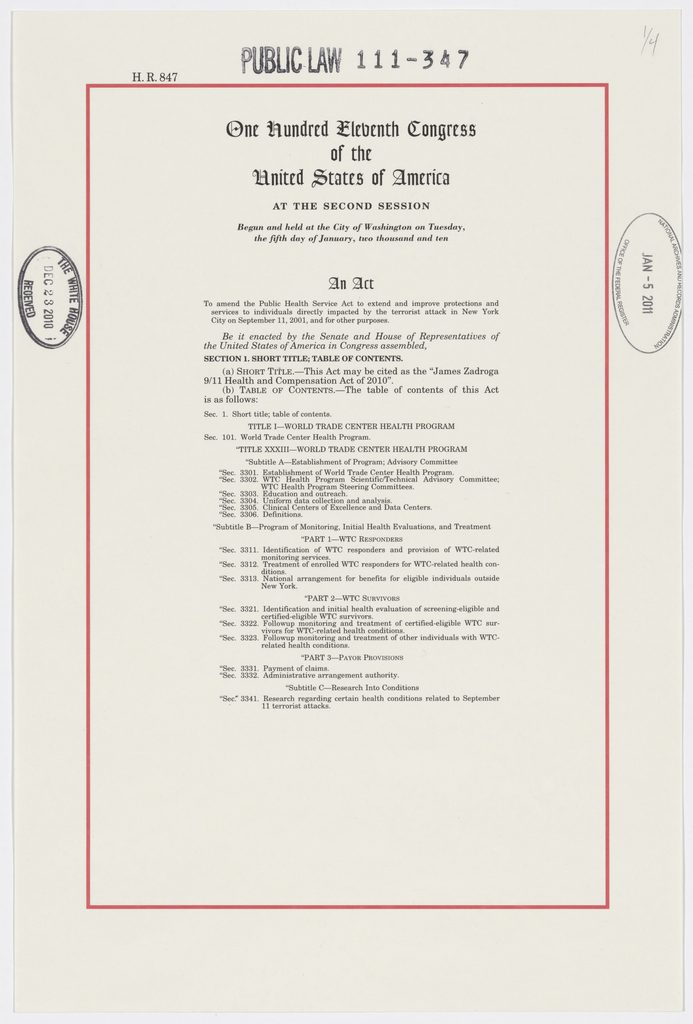
James Zadroga 9/11 Health and Compensation Act
While nearly 3,000 people were killed on 9/11, thousands more died in the years following because of their exposure to toxic dust. In 2011, the James Zadroga 9/11 Health and Compensation Act was passed by Congress to provide healthcare to survivors and those who worked in response and recovery.
Great Seal of the United States
On July 4, 1776, just hours after adopting the Declaration of Independence, the Continental Congress tasked Benjamin Franklin, Thomas Jefferson, and John Adams with creating a national seal. As members of the First Great Seal Committee, each man proposed designs for a national emblem that reflected the independence and aspirations of the new nation. The task proved difficult, and ultimately it took more than three committees and six years to complete the final design for the Great Seal of the United States.
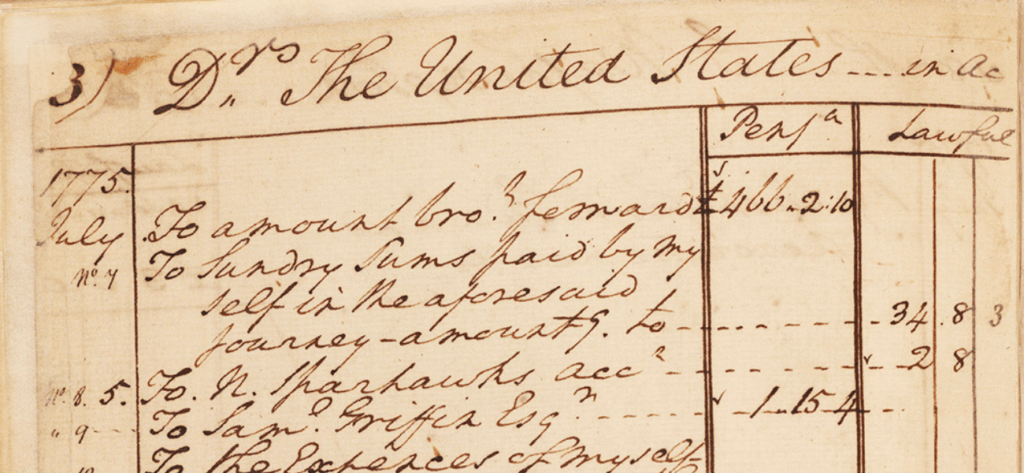
Spymaster-in-Chief: George Washington’s Wartime Espionage
During the Revolutionary War, a large network of colonial spies worked in secret to disrupt British forces. When George Washington took command of the Continental Army in July 1775, he strengthened intelligence efforts by planting false information and writing coded letters to gain an edge over the larger and more experienced British Army. Washington’s account book of wartime spending reveals information about these secret operations.
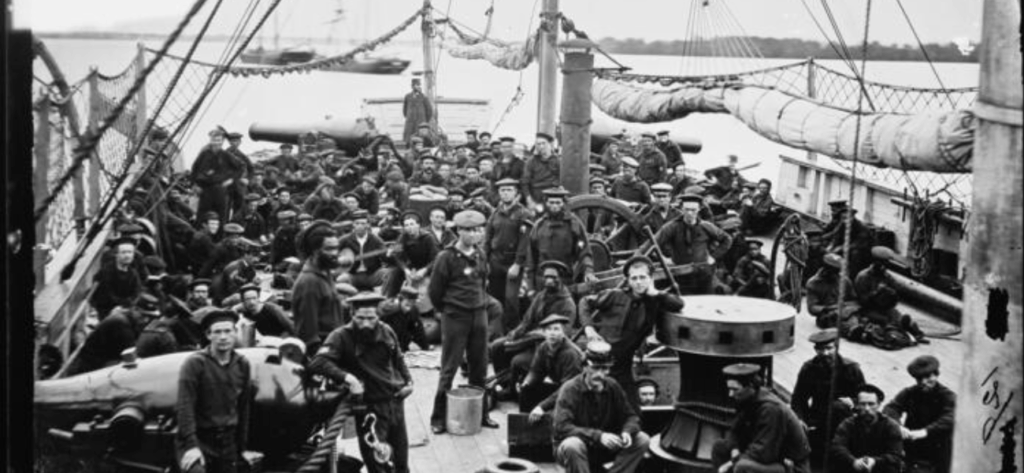
Snapshots of Service: The 250th Anniversary of the U.S. Navy
The U.S. Navy’s long history began on October 13, 1775, when the Continental Congress authorized ships to intercept British transports as war intensified. While the Navy’s early years are preserved in muster rolls, deck logs, and service records, the Civil War saw photography more candidly capture life in the service.
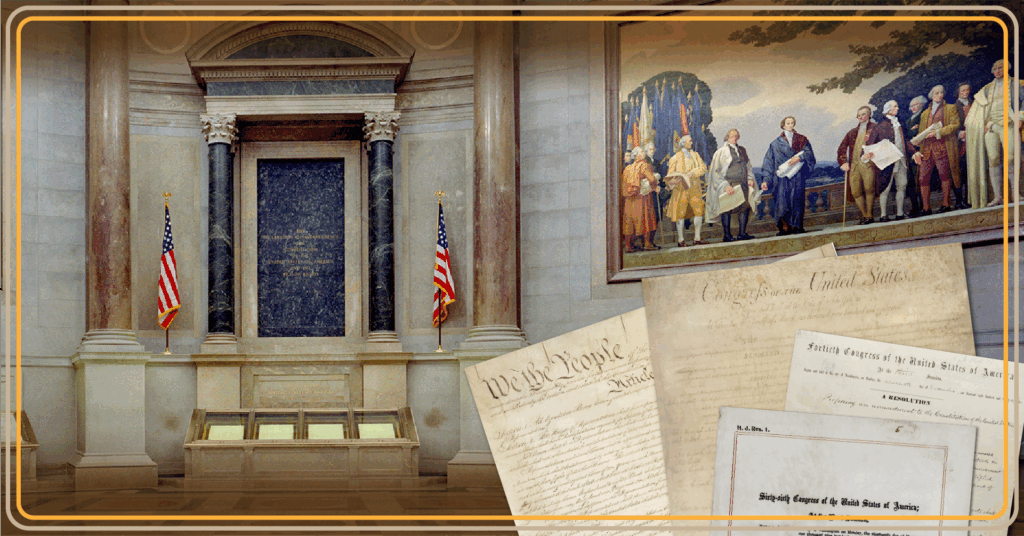
Constitution Day: The Full U.S. Constitution
Now Extended! On display 9/16/25 – 10/9/25 For the first time in history, the entire United States Constitution is on display, celebrating 250 years of American Freedom. In celebration of 250 years of American Freedom, the entire U.S. Constitution and the original Bill of Rights is surrounded by 17 Constitutional amendments, filling the Rotunda at the National Archives in ...